
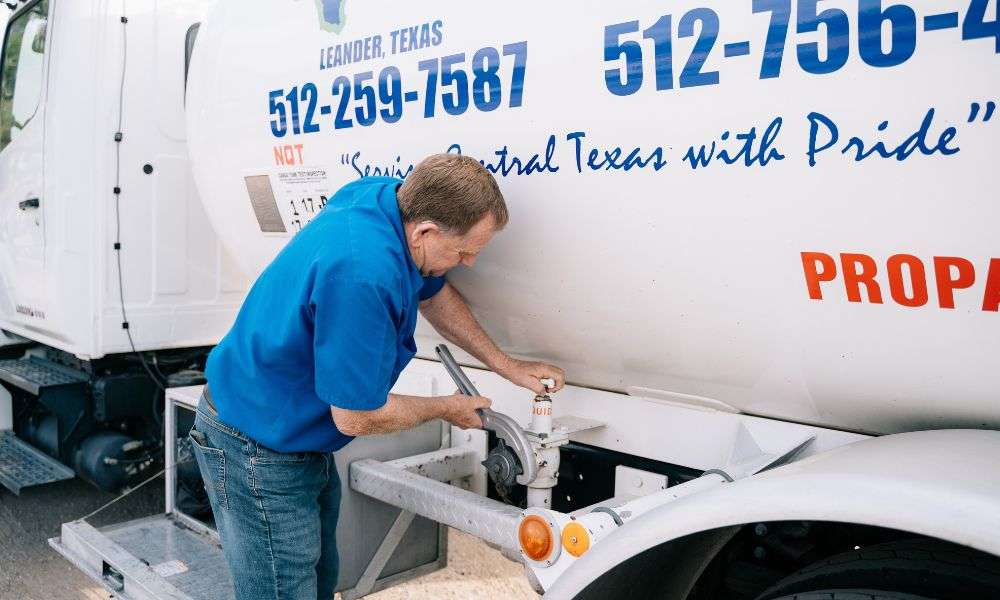
Central Texas homeowners spend a lot of time outside. With mild winters and long evenings for much of the year, the backyard often becomes a second living room. A growing number of families in Cedar Park, Leander, Georgetown, and the surrounding Hill Country are building outdoor kitchens, fire features, and heated pools — and propane is powering many of them.
If you’re planning a backyard upgrade, the most important decisions happen before the patio is poured. This guide explains how to plan propane lines for outdoor living so everything works safely and efficiently for years.
Why Propane Works So Well Outdoors
Propane gives you instant, adjustable heat without relying on the power grid. That makes it a natural fit for outdoor appliances:
- Built-in grills that light instantly and hold steady temperatures
- Fire pits and fire tables with clean flames and no wood smoke or ash
- Patio heaters that extend outdoor season into cooler months
- Pool and spa heaters that warm water quickly
- Outdoor fireplaces and gas lanterns for ambiance
A permanent gas line also means no more swapping out small portable cylinders in the middle of a cookout.
Portable Cylinders vs. a Permanent Gas Line
Many homeowners start with a 20-pound cylinder under the grill. That works for one appliance, but it gets frustrating quickly once you add more.
A fixed line connected to your home’s main tank offers:
- A continuous supply — no running out mid-meal
- Cleaner design — no bulky cylinders cluttering the outdoor kitchen
- Multiple appliances on one system — grill, fire pit, and heater running from the same source
- Better safety — professionally installed, pressure-tested piping instead of frequent connect-and-disconnect
If you already use propane for your home, extending a line to the backyard is usually straightforward. If you don’t, our propane tank installation team can set up a system sized for both indoor and outdoor use.
Step 1: Make a List of Every Appliance — Now and Later
The biggest planning mistake is sizing the gas line only for what you’re installing today. A year later, you add a pool heater and discover the line can’t supply enough gas.
Write down every propane appliance you have or might add, such as:
- Grill and side burner
- Fire pit or fire table
- Patio heaters
- Pool or spa heater (typically the largest outdoor demand)
- Outdoor fireplace
- Future additions like a pizza oven or tankless outdoor shower
Your installer uses the combined demand of these appliances, plus the distance from the tank, to choose the correct pipe size. Planning for the future now costs far less than trenching again later.
Step 2: Check Whether Your Tank Is Big Enough
Adding outdoor appliances increases how much propane your household uses. A pool heater in particular can significantly raise consumption. If your current tank was sized only for a water heater and range, you may find yourself scheduling deliveries far more often.
Our guide on what size propane tank you need for your home explains how appliance load affects tank sizing. It’s worth reviewing before you finalize your backyard plans.
Step 3: Plan the Route Before Hardscaping
Gas lines are typically run underground to outdoor features. The ideal time to install them is before you pour concrete, lay pavers, or build the outdoor kitchen island.
Things to coordinate with your contractor and propane provider:
- The path from the tank or house connection to each appliance
- Shutoff valve locations that are easy to reach
- Clearance from trees, sprinkler lines, and other utilities
- Where the line enters the outdoor kitchen or fire feature
If you’re a contractor working on a new build, our builder propane services help coordinate gas lines with your construction schedule.
Step 4: Put Safety First
Outdoor gas installations should always be done by licensed professionals. In Texas, propane work is regulated by the Railroad Commission of Texas, and proper installation includes pressure testing the lines and checking every connection.
A few safety habits for outdoor propane:
- Keep fire pits and heaters at the manufacturer’s recommended clearance from walls, roofs, and furniture.
- Never use outdoor propane appliances in enclosed spaces.
- Know where each shutoff valve is located.
- Have lines and connections inspected periodically, especially after landscaping work.
Review our propane safety page so everyone in your household knows what to do if they ever smell gas.
Step 5: Keep Your System in Good Shape
Outdoor systems face sun, rain, and temperature swings. Regular propane tank maintenance keeps regulators, valves, and connections working properly. If your aboveground tank is exposed to strong Texas sun, propane tank painting helps reflect heat and protect against rust — learn more in our post on how tank painting protects your investment.
Don’t Forget Your Delivery Schedule
More appliances mean more propane use, especially during pool season and cool evenings around the fire pit. Setting up reliable propane delivery keeps your backyard ready whenever you are. Our article on how often you should schedule propane delivery can help you choose the right plan.
Bonus: One Fuel for Backyard Fun and Backup Power
If you’re already expanding your propane system, it’s a good time to think about backup power too. The same tank that fuels your grill can run a standby generator during outages. See why more Central Texas homeowners are choosing propane generators and explore our propane generator services.
Ready to Build Your Dream Backyard?
A well-planned propane system makes your outdoor space easier to use, safer, and ready for whatever you add next. Propane Plus provides residential propane services throughout Austin, Cedar Park, Leander, Round Rock, Georgetown, Burnet, Bertram, and nearby communities — check our service areas to confirm coverage.
Request service today to plan propane lines for your outdoor kitchen, fire pit, or pool heater.